
Mapping an Industry Ecosystem for a Healthcare NGO to help uncover hidden Challenges and Opportunities
Ideasutra worked closely with an NGO operating in the Healthcare space to identify hidden challenges and opportunities in a newly proposed diversification plan. We used design research and visual frameworks to identify challenges and opportunities and communicate our findings.
Opportunities shift when vantage points change
Business ecosystems sometimes tend to exhibit differing characteristics when observed from micro, meso and macro views. What may have seemed like a viable business opportunity when operating at a micro level may seem very different when seen from a macro view. The addition of variables such as new players, altered power dynamic or new lines of communication add complexity, making known ways of working inadequate.
Our client, an NGO working in the healthcare space, whose beneficiaries are workers in garment factories, brought us onboard to help them understand why a model that had worked for over a decade, was seen to falter when an attempt was made to diversify within the very same industry, featuring the same players.
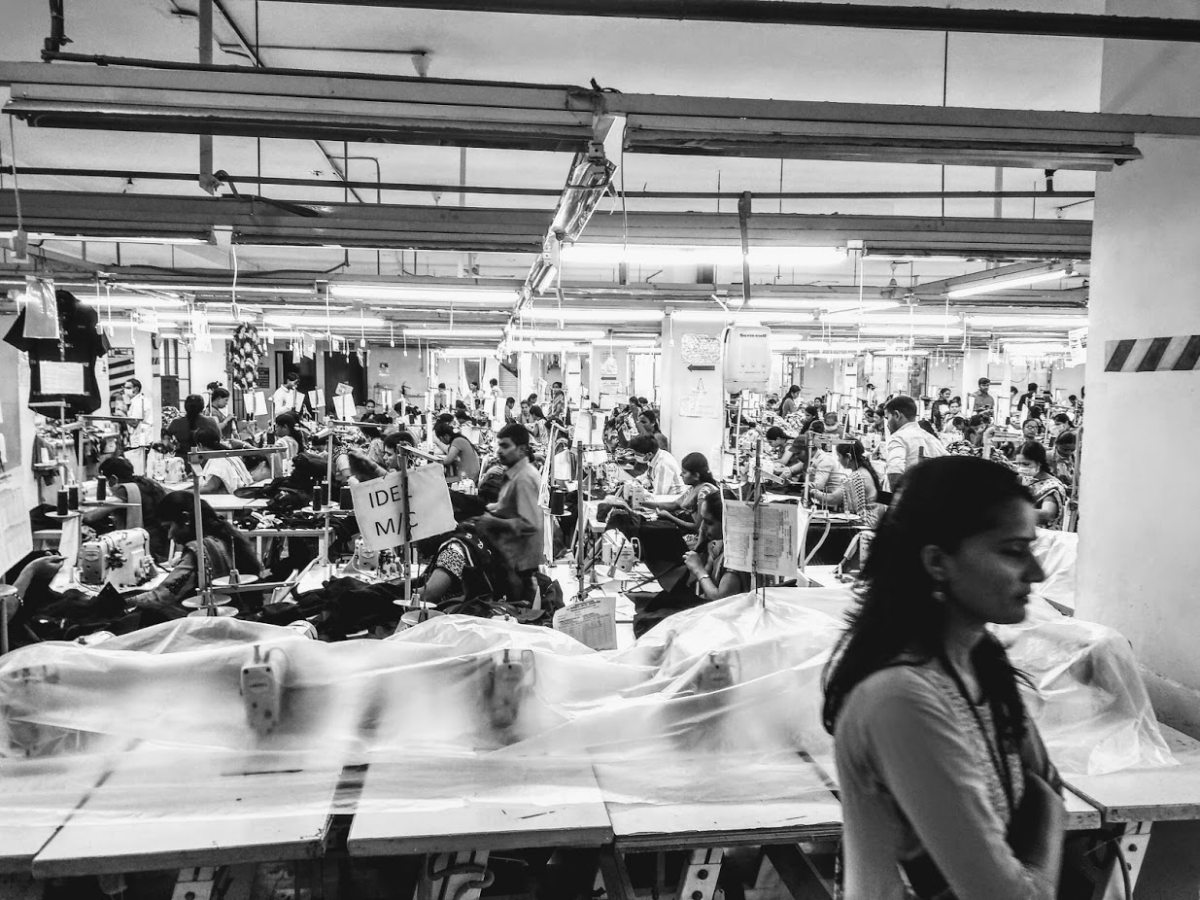
Our team mapped out the individual and sometimes overlapping needs through a series of stakeholder interviews, site observations and shadowing.
Collecting data through Design Research to map Opportunities and Challenges
We worked closely with the client management team, over a 2-month period, to first collect data and map out areas in which value was being generated and the engagement touchpoints that had critical challenges.
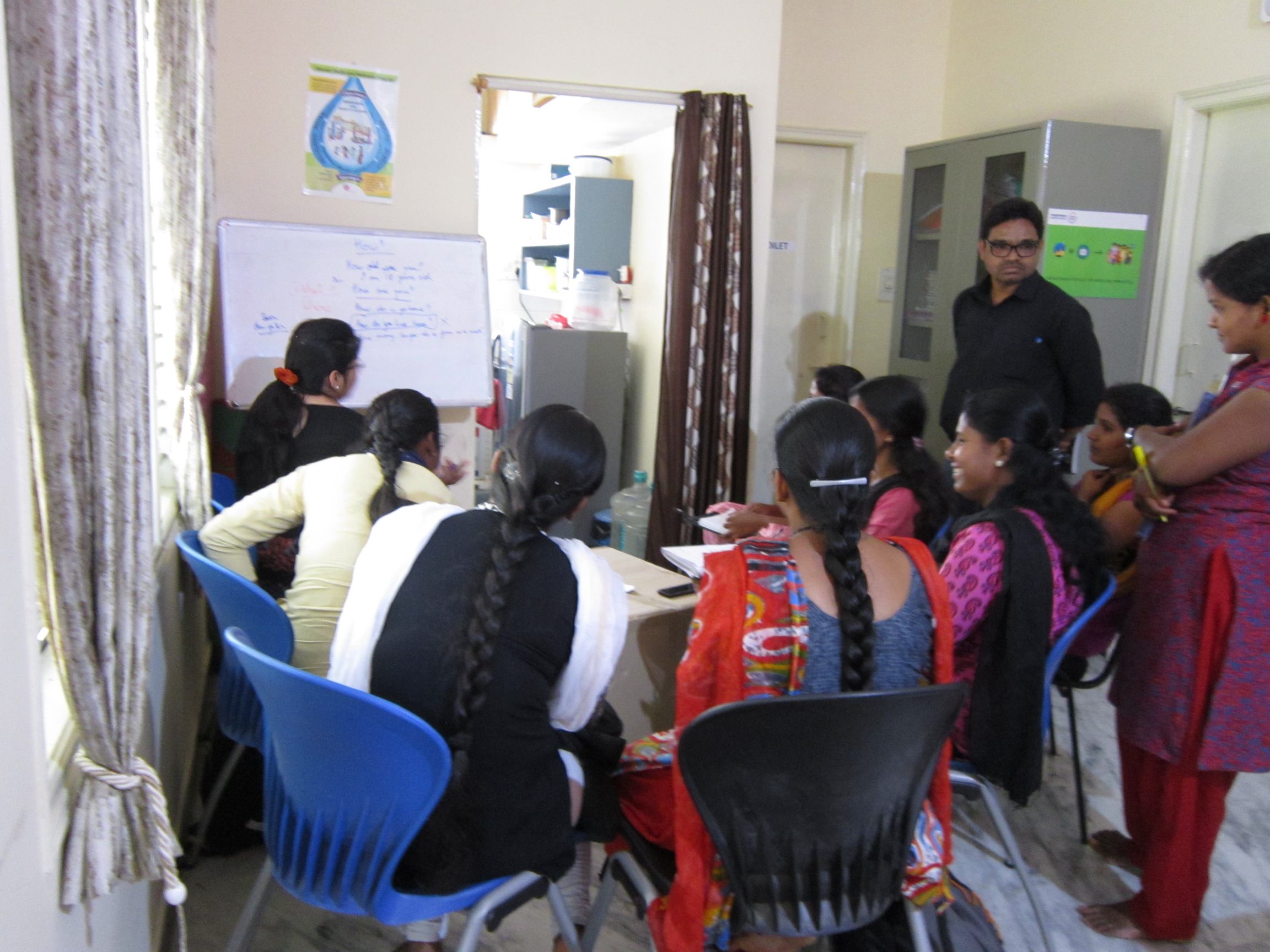
We collected data through secondary research on the industry, and also conducted stakeholder interviews across the organization, starting at the field level and working our way to the management layer. This allowed us to identify potential gaps in areas such as goal setting, operational processes and internal communication.
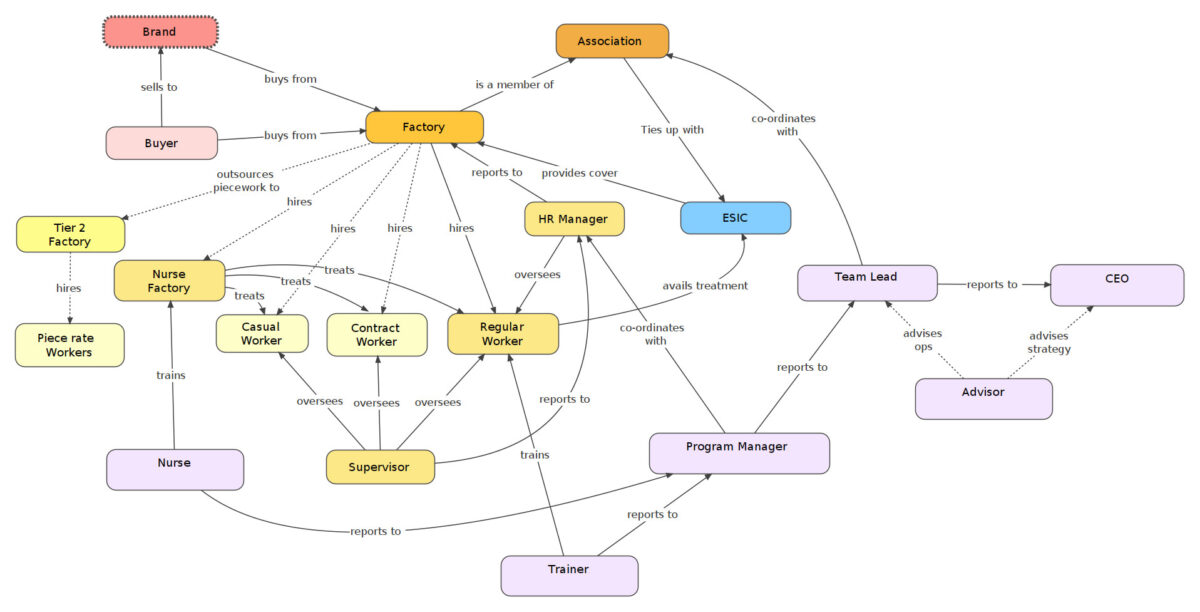
Conveying the Big Picture
We collaborated with our client’s management team through co-creation sessions, utilizing methods such as Customer Journey Mapping and Service Blueprinting.
This approach allowed us to gain an understanding of the different tools and processes employed by their engagement and project management teams when establishing partnerships and acquiring customers.
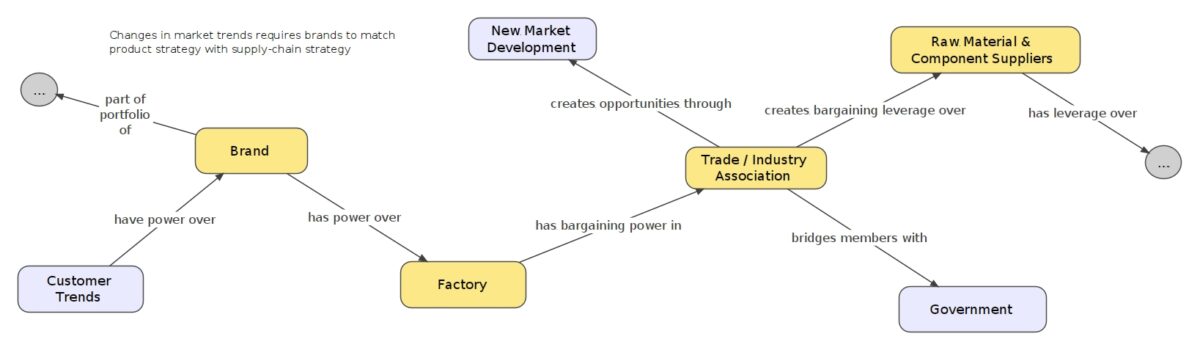
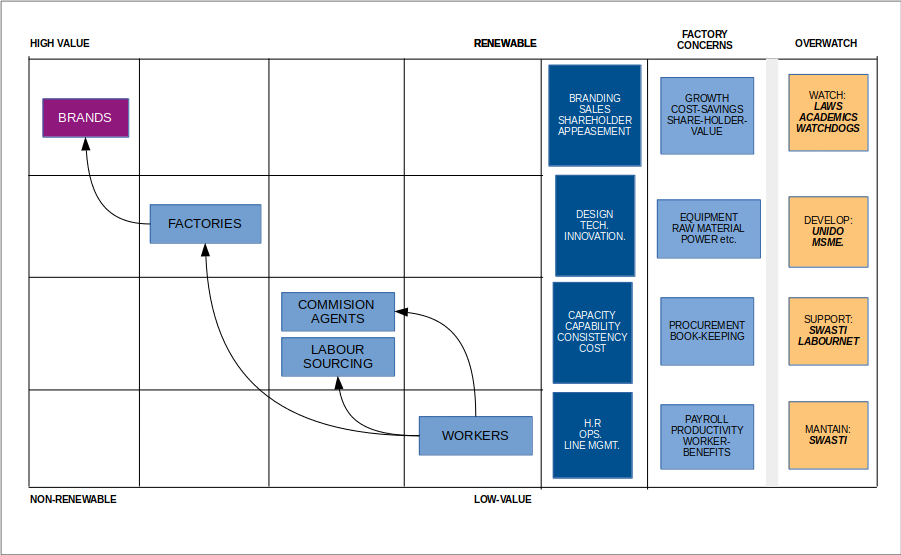
Our final report consisted of a written analysis accompanied by visual representations of the crucial insights that we gathered. By employing concept maps and other visual relationship models, we illustrated the power dynamics among various industry players. We also highlighted the internal and external challenges that must be addressed to ensure successful diversification.
Some of the frameworks we used during this project included:
- Service Blueprint
- Shadowing (Research Method)
- Customer Journey Mapping
- Concept Mapping
Outcomes of the Program
The garment industry faces intense competition, operates on thin margins with expectations of fast turnaround times, and this reflects on their labor policies. Gaining a foothold in an industry like this, and being able to convince key industry leaders of the value of enhanced healthcare for workers requires a strong overview of market economics, buyer-supplier relationships and subsequent choices in hiring practices. The client team were able to gain a better understanding of the dynamic of the industry, and also the need for a multi-layered approach to partnership building.
Explore more Case Studies
-

Healthcare Non-Profit identifies a pathway to Diversifiation
We worked with an NGO operating in the healthcare space…
-

Facilitating Digital-Transformation for a Global Talent Agency
Ideasutra facilitated a series of workshops aimed at supporting an…
-

Top E-Commerce firm Enhances Collaboration between Cross-Functional Teams
Ideasutra developed and executed a transformational program aimed at enhancing…